
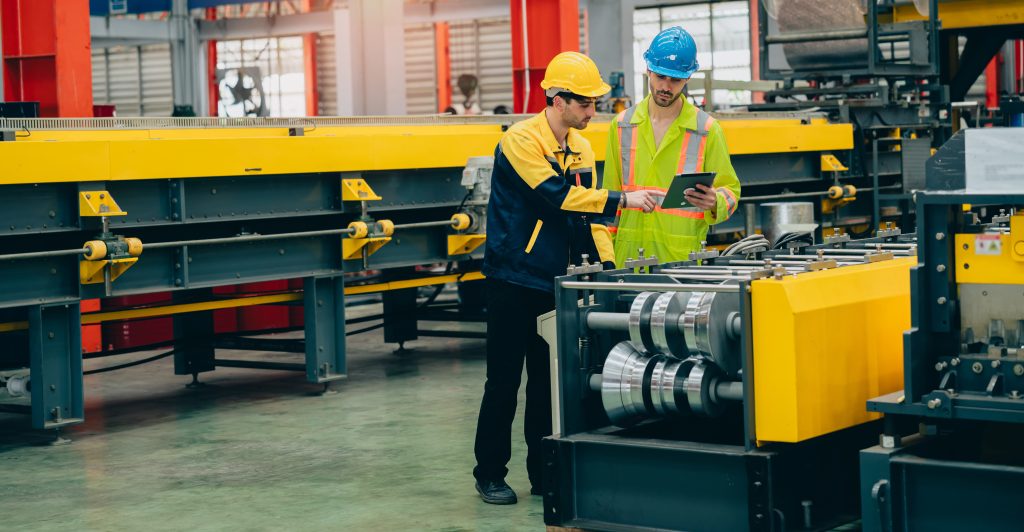
Why Total Productive Maintenance (TPM), Reliability-Centered Maintenance (RCM), reliability engineering, asset management, and other maintenance approaches often address the same challenges from different perspectives.
Maintenance and reliability professionals are constantly exposed to different strategies and methodologies. TPM, RCM, predictive maintenance, condition-based maintenance, reliability engineering, and asset management are often presented as distinct, each with its own terminology, tools, and advocates.
But many of these strategies address the same challenges. Recurring equipment failures, excessive emergency work, production interruptions, increasing maintenance costs, and quality issues rarely fit neatly into one framework. Organizations often spend time debating the methodology to use when the real question is: What problem are we trying to solve?
If you’re responsible for improving reliability, reducing emergency work, managing asset performance, or prioritizing maintenance investments, you’ve likely encountered competing methodologies that claim to offer the answer.
Keep reading to learn:
- Why many maintenance/reliability strategies share common principles.
- Where TPM, RCM, reliability engineering, and asset management overlap.
- How different methodologies often address the same operational challenges.
- Why focusing on problems rather than methodology labels leads to better results.
- How organizations can use the strengths of multiple approaches to improve reliability and performance.
Understanding where maintenance strategies overlap helps organizations focus less on methodology labels and more on the outcomes they are trying to achieve.
Are You Implementing a Strategy, or Solving a Problem?
The maintenance and reliability world is full of familiar terms: RCM, TPM, predictive maintenance, condition-based maintenance, asset management, and reliability engineering. Each brings useful principles and methods. Knowing how to implement a methodology, however, does not mean knowing how to address the challenges or problems in front of you.
Organizations often say:
- “We need TPM.”
- “We need predictive maintenance.”
- “We need an asset management program.”
The more important question is: What needs to change and what is being seen or perceived to require a change? Are recurring failures disrupting production? Is maintenance overwhelmed by emergency work? Are equipment conditions affecting quality?
These challenges may require overlapping capabilities, but not necessarily the same team or organizational approach. An organization can train, introduce inspections, and establish procedures while the problem remains. Implementing the strategy and solving the problem are not automatically the same achievement.
The reality is that many organizations feel they have a maintenance problem, but the actual issue may be inadequate resources, competing priorities, aging assets, etc. Maintenance strategies can help organizations better understand these challenges by identifying opportunities, highlighting gaps, and providing information to support decision-making.
Organizations that focus first on methodology often end up debating processes, terminology, and ownership. Organizations that focus first on the problem are more likely to identify the capabilities, resources, and actions needed. The goal is not to determine what method is “best.” The goal is to understand which principles and practices will be most effective for the challenge at hand.
The Same Problem, Different Perspectives
Consider an asset experiencing recurring failures. Maintenance sees emergency repairs, overtime, and parts consumption. Operations sees interruptions and missed schedules. Quality sees inconsistent product. Asset management sees deterioration and future capital requirements. Finance sees rising costs. The operator sees a machine that constantly needs attention.
These are all different consequences of the same equipment problem. Different groups experience the problem in different ways because priorities, responsibilities, and impacts vary. A lubrication improvement may matter to maintenance because it prevents bearing failures, to operations because it reduces interruptions, and to asset management because it supports service life.
The improvement activity can be the same, while the reason people support it is different. Connecting technical work to those outcomes helps turn maintenance priorities into shared organizational priorities.
Understanding Where Strategies Overlap
Maintenance strategies are most effective when organizations understand how their principles connect to operational challenges and where those principles apply.
Common reliability practices and Total Productive Maintenance provide a useful example. TPM has a commonly recognized eight-pillar structure, while reliability programs use different frameworks. The examples below illustrate some of the common connections between different methodologies.
|
Shared practice |
Reliability connection | Related TPM pillar |
Leadership opportunity |
| Preventive and condition-based tasks | Manage failure modes | Planned Maintenance | Connect failure prevention to dependable production |
| Operator inspections and basic care | Identify deterioration early | Autonomous Maintenance | Clarify operator and maintenance responsibilities |
| Root-cause analysis and defect elimination | Prevent recurring failures | Focused Improvement | Unite departments around recurring losses |
| Equipment-condition standards | Preserve required performance | Quality Maintenance | Connect equipment condition to product quality |
| Skills development | Improve execution and judgment | Education and Training | Build capability to sustain the work |
| Design and maintainability improvements | Apply lifecycle experience | Early Equipment Management | Bring operating and maintenance lessons into equipment decisions |
In practice, organizations rarely rely on a single approach. Reliability engineering may help identify and understand recurring failures, RCM may help determine the most appropriate maintenance tasks, TPM may strengthen operator involvement and equipment ownership, and asset management principles may guide investment and lifecycle decisions. Each approach contributes a different strength, allowing organizations to address challenges from multiple perspectives.
An operator inspection, for example, can provide early warning, support equipment ownership, and create an opportunity for planned intervention. However, organizations must clearly define what operators can safely inspect, what requires specialist knowledge, and what actions should follow when an abnormality is identified. Understanding where strategies overlap helps coordinate these activities while recognizing the contributions of different disciplines.
Align Capabilities with the Work
Once the problem is understood, organizations must determine whether they have the capabilities required to address it. Emergency work may point to gaps in planning, scheduling, prioritization, or coordination with operations. Repeat failures may require stronger diagnostics, failure analysis, precision maintenance, or engineering support.
If operators routinely miss developing issues, organizations may need stronger training, clearer inspection standards, and a dependable response process. When technically sound recommendations are consistently not adopted, communication practices, change management, and decision-making processes should also be evaluated.
Not every gap requires a new hire. Training, clearer responsibilities, collaboration, or specialist support may be appropriate. Hiring another technical expert will not necessarily resolve a coordination problem. More inspections will not resolve an inability to respond. Implementing a program cannot compensate for unclear authority or conflicting expectations.
Start with the Problem, Not the Methodology
Before implementing a new strategy, restructuring a team, or launching another improvement initiative, come back to these questions:
- What problems need solving, and what outcomes need to improve?
- Which technical and organizational capabilities are required?
- Where do we have those capabilities, and where are the gaps?
- How must maintenance work with other functions?
- What authority, resources, and organizational support will be required?
- How will we know whether the effort is succeeding?
Maintenance strategies are not competing solutions. Many share principles and often address the same challenges from different perspectives. The goal is not to implement TPM, RCM, reliability engineering, or asset management for their own sake. The goal is to improve reliability, support objectives, and make informed decisions about where effort/resources will have the most impact.
Understanding where these strategies overlap helps organizations apply the right principles, in the right combination, to the challenges they are facing. If your maintenance organization is looking to prioritize impacts and broad challenges, contact me.


