
Last month, we explored, analyzed, and discussed how the right metrics drive success and turn maintenance into a reliability culture. This is important, but as maintenance/operations managers know, work doesn’t wait for metrics; assets don’t care how you define downtime; and, ultimately, staff just want to know what their next assignment is. Without the proper coordination, no matter how much you are working towards your KPIs, the flow of work continues. That means reactive repairs, unexpected resource shortages, and the constant pressure to keep assets running, leave you fighting fires rather than working towards your reliability goals.
How do we properly coordinate our staff and keep assets running, without ignoring the metrics we’ve worked so hard to establish? By utilizing a work management philosophy. When properly implemented, work management gives us a framework (and boundaries) to focus your teams’ efforts.
This blog will explore how a work management philosophy that fits your organization/department’s needs can shift your maintenance management from chaos to choreography. Work management is so much more than a software outlining “what” you need. Picture it instead as the framework, or principles, you’ll use to keep your team focused, communicating effectively, and working together to meet your reliability KPIs.
Prep the Stage: Starting
Too often, managing maintenance teams feels like waiting for the dreaded phone call:
“Asset X broke, we need it running ASAP”.
No documented request, no planning, no scheduling, just frustration. Like you, I’ve dealt with ever-growing backlogs, decreased PM execution, burnout, and more. This is exactly the time to take a step back and think critically about what’s driving the chaos.
Maintenance is not a department unto itself. You are perhaps the most integrated part of a corporation, interacting with operations, engineering, safety, and leadership individually, or collectively, throughout the year. You understand the big picture. Others may not. If we’re really driving towards reliability excellence, all parties need to be aware of the moving parts, even if only at a high level. Creating awareness amongst all parties gives you the tools you need to make the magic happen in the background. This includes processes and alignment.
Processes: How is work going to be completed, from request through execution? Proper processes ensure:
- Fully defined work requests: No more guessing what’s broken, with limitless possibilities for solutions. Start equipment with the knowledge to efficiently troubleshoot the issue(s).
- Clear approval processes – Empower staff to hold boundaries and stay focused on the tasks you’ve assigned them.
- Effective planning and scheduling – Prioritize that which truly needs prioritizing
Alignment: No one wants to hear the equipment they just spent days repairing should have been left alone because it’s being replaced next week and “we could have gotten by” until then. Proper alignment yields:
- Shared priorities & schedules
- Shared expectations
- Collaborative communication.
Take the time to meet with each group and gain consensus on the priorities for the month, quarter, and/or year. Each group will play a part. Understanding how those parts connect reduces conflict, reworks, and downtime.
Set the Choreography: Planning & Scheduling
Now that we’ve established and aligned priorities across the corporation, it’s time to plan and schedule the work. Here, it’s important to not conflate the two. Keep the two tasks distinct.
Planning is where you forecast the resources (people, materials), timelines, and ultimately the ability to execute the work efficiently, safely, and correctly. Here, we identify the “how”, including:
- Which staff members are needed?
- Do they have all the skills necessary?
- Is training something we need to consider?
- Do we have the parts we need?
- What’s the lead time for missing parts?
- Are lockouts or shutdowns required?
- Has this been communicated to all impacted parties?
Scheduling, as the name implies, is where we take the efforts in outlining the “How” from planning into the “Who” and “When” focusing on:
- Technician availability
- Workload balancing
- Operational constraints
- Parts and equipment availability
- Assignment communication
Showtime: Execute the Work
It’s time to set your technicians free, equipped with the benefits of the background work. Our technicians’ value here goes beyond just using their tools, and they need to know this. Now is when they provide invaluable feedback for future planning, scheduling, and overall KPIs. With a properly implemented work management philosophy, your technicians will be able to:
- Efficiently execute the job plan
- Communicate progress and issues
- Accurately document the work
No one knows the equipment better than the maintenance technicians. Set them up for success and watch your reliability follow.
Curtain Call: Review & Report on your Accomplishments
Time to take the data generated by your technicians, the KPIs you’ve established, and review what’s gone well and what can improve. Relevant data becomes the driver of future work management with questions such as:
- Are there further workflow performance enhancements that can be made?
- What bottlenecks were encountered?
- Were technicians missing anything (plans, parts staging, unrealistic schedules, etc.)
- Can we improve the data quality?
When done well, this stage becomes the driving force of continuous improvement.
Conclusion
A well-considered, thoughtfully implemented work management philosophy shifts the way maintenance is considered by all teams. Rather than simply being miracle workers, maintenance becomes a cog in the system that increases productivity and efficiency while driving towards actionable performance metrics.
Maintenance managers change from firefighters to stage managers, coordinating the “hidden” background work that enables operations to thrive. When you next look at your maintenance strategy remember that control is possible; if you:
- Get coordinated with other groups in your corporation
- Actively plan, schedule, and execute work while maintaining visibility across the organization
- Review executed work for bottlenecks, data quality gaps, and workflow optimizations
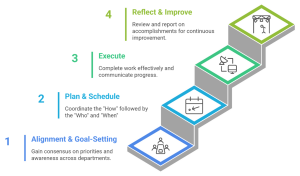
Figure 1: The Work Management Staircase of Excellence
To start, ask yourself and your team a couple honest questions:
- Are our days governed by reactive chaos or are we approaching work with confidence in its priority and our ability to efficiently execute it?
- Do we have work management software? Is that software enabling our work, or causing more chaos?
- Do we have confidence that when people ask us for work, they’ll provide us the information we need?
- Do we have clear processes defining workflows from request through to execution?
If you’re exploring these questions and starting conversations to bring a work management philosophy into your maintenance environment and want a fresh perspective; contact me. I’d be happy to help you take the next step.


