
Peter Burke – Ornithologist, Senior Ecologist
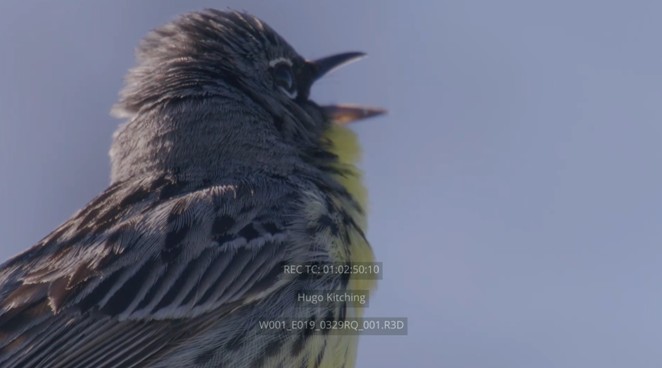
In July 2022, I wrote about GEI’s contributions to the successful establishment of new breeding habitat for Kirtland’s Warbler in Ontario; the Kirtland’s Warbler is a globally endangered bird species endemic to the Great Lakes. Three years later, this blog provides an update and describes advancements, to which GEI has significantly contributed, for growing Ontario’s breeding population.
Our understanding of warbler habitat requirements improved greatly through Simcoe County’s Packard and Museum Tracts habitat creation programs. While neither site has yet to host a breeding pair of Kirtland’s, we continue to monitor the structural parameters that attracted the warbler in 2022 and 2023 and what we can improve to create vital components that females require for nesting sites. Our first attempts at creating warbler habitat, starting in 2017, have become homes to a diverse set of organisms. While these sites are not yet hosting breeding Kirtland’s, they have helped uncommon-to-rare species, birds like Grasshopper and Clay-colored Sparrows, Eastern Whip-poor-will, plants like Leathery Grape-fern, Early Buttercup and Cutleaf Anemone, as well as sand-loving moths such as Dune Sallow and Green-spotted Sympistis (both Endangered in Ontario).
In 2022, GEI helped bring together like-minded organizations that formed a working group to help establish more habitat creation across southern Ontario. This group consists of Sir Sandford Fleming College, Simcoe County Forestry, Oak Ridges Moraine Land Trust, Birks Natural Heritage Consultants, Nature Conservancy Canada, Forests Canada and GEI Consultants Canada. The group is advised by the Conservation Team for Kirtland’s Warbler, coordinated by the American Bird Conservancy.
Creating more new warbler sites
In these four years, the team has worked on the purchase of over 70 ha of agricultural lands to be converted to warbler habitat. To date, we have restored half of that property, called the Featherstone Tract, about 75 km east of Toronto on the Ganaraska sand plain. This collaboration involves many people interested in contributing to afforestation of agricultural row crops, including native seed collection, exotic plant species removal, farming techniques used in the preparations of the site, and monitoring plant and tree growth.
The Featherstone Tract provides our team with a site to test best practices for habitat development. A three-year program was designed to help understand how seed-based restoration can best be employed, along with the planting of trees, to establish Kirtland’s habitat as quickly as possible. Starting in 2024, the team initiated the first of three phases, working with roughly a third of the site. In 2026, the final phase will be seeded and planted, and the monitoring program continues to collect data on timing and spatial parameters, vegetation establishment and survival, successional stages, problematic invasive plant species control, and the development of the critical shrub layer. Already, the Featherstone Tract site has been documented for use by several species at risk, including two bats, Hoary and Silver-haired, and the threatened, Yellow-banded Bumblebee. While it will take roughly five years for the trees to grow to sufficient size to be attractive to the warbler, we are already learning a great deal from our work.
Additionally, the working group has engaged with the Algonquin Forestry Authority in Algonquin Provincial Park to create more habitat. This will require a different approach than Featherstone, which restores agricultural fields to forest. In the vast expanse of Algonquin Park, we are working with forestry professionals to carve out conditions suitable for Kirtland’s while simultaneously meeting timber yield targets. The presence of a singing male Kirtland’s nearby in 2023 gives us optimism and engaging the Authority to understand the needs of the warbler, and other organisms of these young pine forests, has promise.
Discovering Canada’s third breeding site
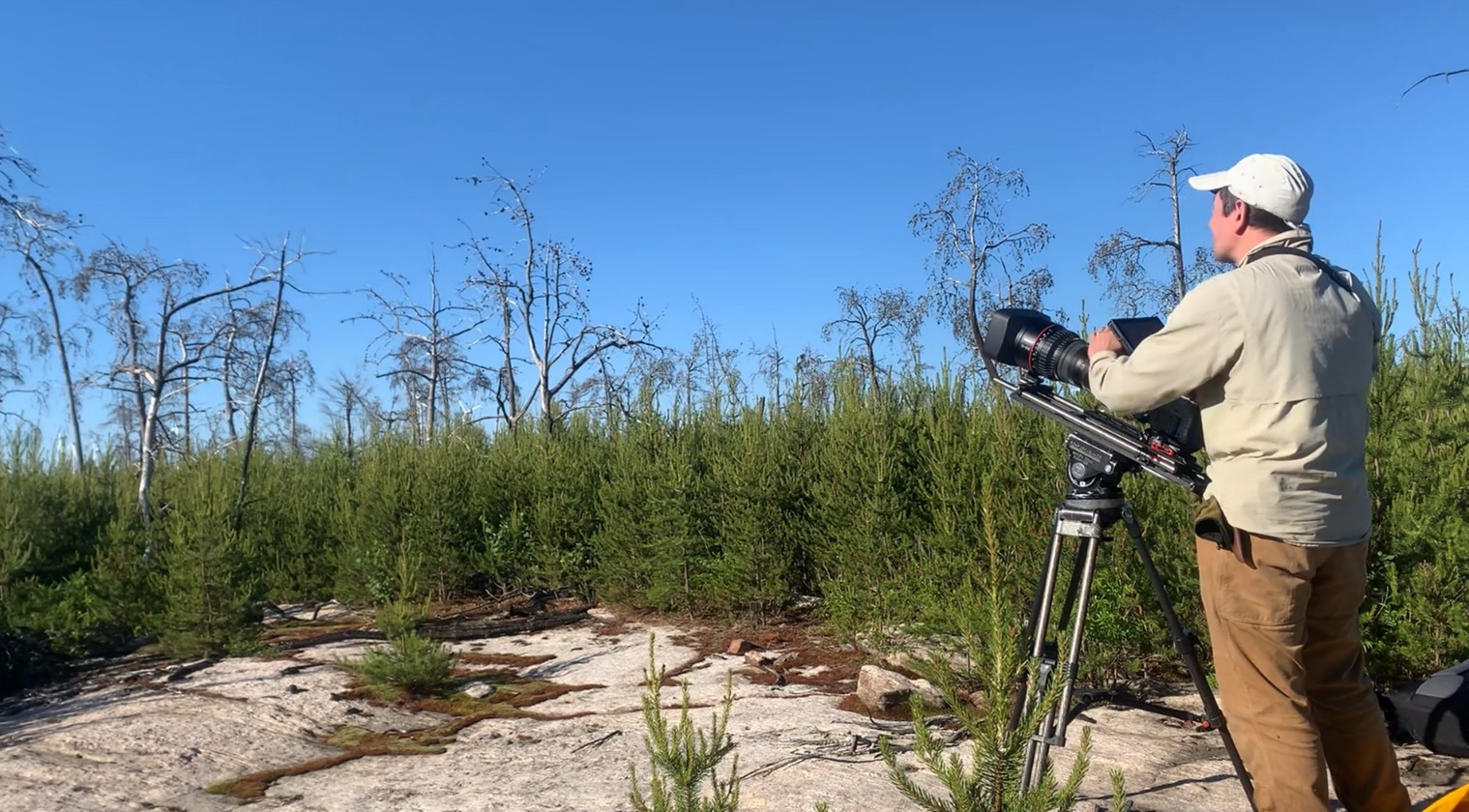
In 2023, GEI began to monitor the Parry Sound 033 fire footprint for Kirtland’s Warbler near the community of Henvey Inlet on Georgian Bay (You can read about how we used remote sensing technology for that monitoring program in this blog by me and my GEI colleague, James Leslie.) That June, the young, dense Jack Pine recovering after the 2018 fire began to look like a home for Kirtland’s, as trees had reached almost two meters in size. We were thrilled to find three males searching for mates during our surveying that year. As of 2025, the population is growing: Two pairs are attempting to breed here, supplemented by three additional males. The rocky landscape is novel habitat for the species, and we eagerly continue to watch for the first successful nesting.
GEI continues to help lead the way in Kirtland’s Warbler recovery in Canada, and we are using our talents to find solutions to the challenges that population faces to expand further. To provide the ‘special’ cover that females prefer for nesting sites, we are testing growing techniques at the Sir Sandford Fleming nursery to establish the shrub layers at restoration sites which appear to be essential to success. As we continue our outreach to share knowledge and encourage participation, the forest and parks industries are noticing and sharing our new forestry techniques to accommodate the Kirtland’s Warbler, such as those in Algonquin Park.
Our efforts are gaining attention and demonstrate our expertise in understanding natural systems and how to effectively replace and manage them in our landscapes. Check out our new video created by GEI’s Vivien Gandolfi. It gives a fresh perspective on the team’s unique skill sets, accomplishments, challenges and how we plan to move forward to help save the endangered Kirtland’s Warbler and its habitat.


